
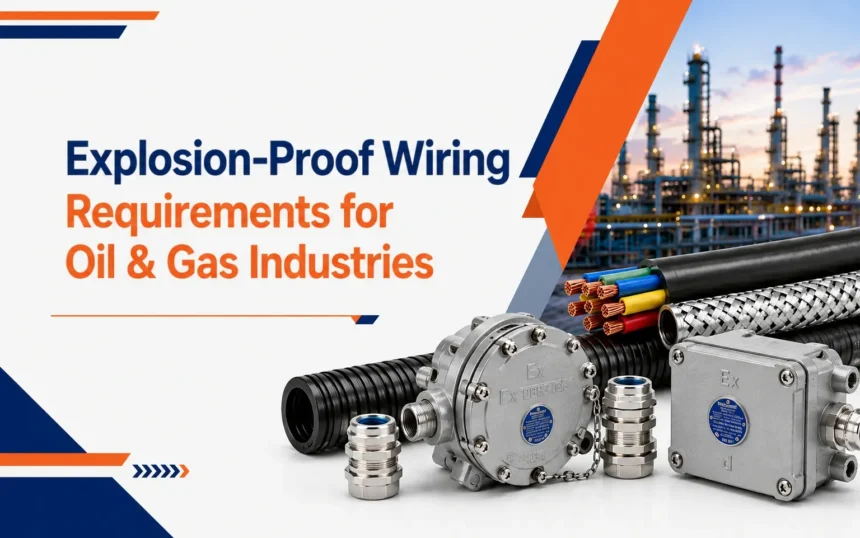
Oil and gas facilities work with flammable vapours, combustible gases, and high-pressure processes every single day. A spark from a poorly rated cable or a loose termination isn’t just an inconvenience in this environment, it’s a genuine safety hazard. That’s why wiring in refineries, gas processing units, drilling sites, and petrochemical plants is never treated the same way as a standard industrial installation.
As a wires and cables dealer and distributor, Bharat Trading Corporation (BTC) regularly works with contractors and project teams sourcing electrical wire for demanding industrial sectors, including oil and gas. This blog looks at what actually makes wiring suitable for hazardous, explosion-prone environments, and what to keep in mind while specifying and sourcing cable and accessories for this sector.
Why Oil & Gas Facilities Demand a Different Standard of Wiring
Most industrial plants worry about heat, moisture, or mechanical wear. Oil and gas facilities deal with all of that, plus the constant presence of flammable gases and vapours. In areas classified as hazardous zones, even a small electrical fault, a spark from a damaged cable, an overheating termination, or a poorly sealed gland, can trigger a fire or explosion.
This is why electrical infrastructure in this sector is planned around hazardous area classification. Zones are graded based on how often and how long flammable atmospheres are likely to be present, and every cable, gland, and enclosure used within a classified zone needs to be selected with that risk in mind. Getting this wrong isn’t a minor specification error, it’s a direct safety and compliance issue.
Key Wiring Considerations in Hazardous Oil & Gas Environments
While the exact requirements for a given zone should always be confirmed against the relevant hazardous area classification and site engineering standards, a few practical factors come up consistently when planning wiring for oil and gas facilities:
- Fire safety and low smoke behaviour.
Cable installed in enclosed plant rooms, control panels, and process areas benefits significantly from insulation that limits flame propagation and reduces smoke output. FRLS (Flame Retardant Low Smoke) and LSZH (Low Smoke Zero Halogen) cable are widely used in industrial and hazardous settings for exactly this reason, they reduce fire spread and improve visibility and air quality during an emergency, which matters enormously in confined industrial spaces.
- Mechanical protection
Process areas near compressors, heaters, and high-temperature equipment need cable insulation that can withstand sustained heat without degrading. PTFE cable is known for handling high-temperature environments and is a common choice where standard PVC-insulated cable would not hold up.
- Secure, corrosion-resistant terminations
In oil and gas plants, terminations are constantly exposed to vibration, moisture, and sometimes corrosive atmospheres. A loose or corroded termination is one of the most common causes of arcing and overheating. Reliable cable lugs and glands that resist corrosion and maintain a tight connection over years of operation are essential to keeping a hazardous area safe.
- Organised, well-managed cable routing.
Poorly routed or loosely bundled cable is harder to inspect, harder to maintain, and more vulnerable to accidental damage. Proper cable ducts and management systems help plant teams keep wiring organised, accessible for inspection, and less prone to wear.
Where BTC Fits Into an Oil & Gas Project
BTC’s role in oil and gas projects is that of a supplier and distributor, we help contractors, panel builders, and project engineers source the cable and accessories that go into building a safe, well-organised electrical system. Our wires and cables range includes options relevant to industrial and hazardous-duty applications, including PTFE cable for high-temperature resistance, alongside standard power and control cabling from brands such as RR Kabel and Dynamic Cable.
Beyond cable itself, we distribute the supporting accessories that hold an installation together safely:
- • Cable lugs and glands for secure, corrosion-resistant terminations
- • Sleeves for cable protection and clear identification
- • Cable ducts and cable management accessories for organised, inspection-friendly routing
- • Terminal blocks for reliable panel-side connections
- • Enclosures and panel accessories for protecting control systems from the surrounding environment
We supply these both as standard stock and in customised lengths and specifications depending on project requirements, and we handle bulk orders for large installations alongside smaller quantities for contractors and individual sites.
A Note on Specification and Compliance
Hazardous area wiring is a specialised discipline, and the exact cable, gland, and enclosure specifications for a given zone should always be confirmed against your site’s hazardous area classification, applicable engineering codes, and the certifications required for that specific installation. As a supplier, Bharat Trading Corporation distributes products carrying ISO, BIS, RoHS, and CE certification, and we’re glad to work with contractors and engineering teams to help source cable that matches their project’s technical requirements. For zone-specific hazardous area equipment, always confirm the certification requirements with your project’s safety and design engineers before finalising a specification.
Why Getting This Right Matters
For plant operators, an electrical fault in a hazardous zone isn’t just downtime, it’s a direct risk to people and infrastructure. For contractors and panel builders, getting the specification right the first time protects the project timeline and the client relationship. Sourcing cable and accessories that are properly suited to the conditions of an oil and gas site, from fire-safe insulation to corrosion-resistant terminations, is one of the most practical ways to reduce that risk before a single length of cable goes into the ground.
Talk to Bharat Trading Corporation Before You Source Your Next Order
If you’re planning wiring for an oil and gas project and want to make sure you’re sourcing cable and accessories suited to the demands of the site, it helps to get the specification right before procurement begins. As a wires, cables, and electrical accessories dealer and distributor, BTC can help match the right products to your project’s requirements, in the quantities you need.
Browse our product range or get in touch with BTC to discuss your oil and gas project’s wiring requirements.