
Description
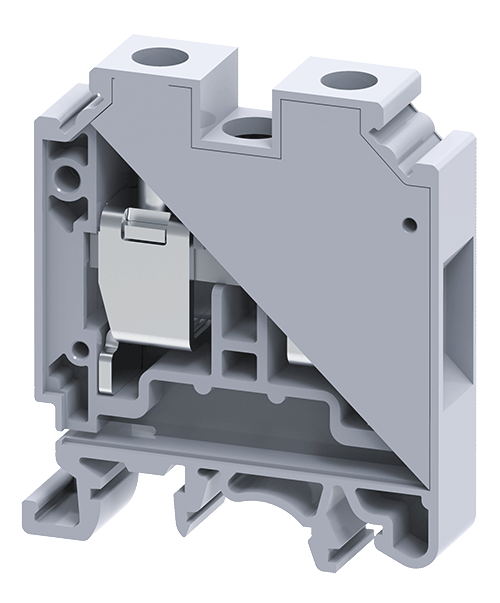
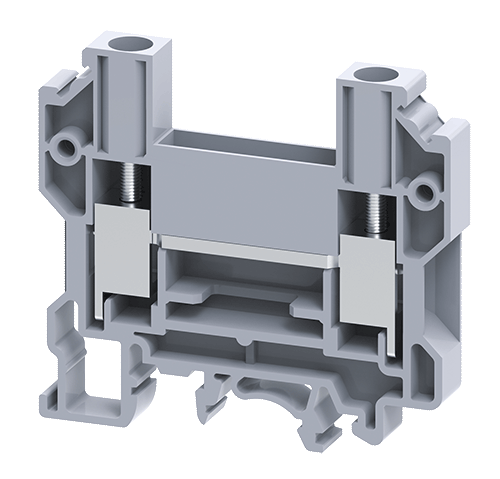
Low Density Plastic Terminals
Close type terminals, rigid type terminal blocks, and Euro Series terminal blocks of Suraj Electronics are specifically made to be touch proof. The highest-grade phenol formaldehyde resin (Bakelite), low-density plastic (LDP), and polybutylene terephthalate (PBT), an insulating base material, are used in the transmission of electrical control signals. PBT is a material that is unbreakable, non-hygroscopic, highly insulating resistant, and able to endure high impulse voltages. Superior grade copper alloys with the ideal ratio of copper to zinc are used to make the electrical conductors, resulting in low temperature rise and little transmission loss of electric current within predetermined bounds.
High tensile mild steel is used to make the screws, however brass and stainless steel 304 grade are other options. The mild steel screws underwent zinc passivation, utilizing a particular grade of zinc that is resistant to corrosion even under extreme conditions for extended periods of time. Bright nickel is applied on brass screws.
Technical Specifications
- Insulating Material : Low Density plastic
- Ways : 12 ways; Can be customized from 1 way to 11 ways
- Rated operating voltage : 250 V. AC
- Rated and uninterrupted current : 5A, 6A, 10A, 15A and 30A
- Ambient temperature : -10 °C to 55 °C
- Rated operating frequency : 50 Hz/60 Hz
- Rated impulse voltage : 2.5 Kv for one minute
- Insulation resistance : >20 Mega Ω
- Colors : White and Black
Common uses and features of Low-density Plastic Terminals
1. Electrical Insulation: LDPE terminals provide good electrical insulation, which is crucial for preventing short circuits or electrical shocks.
2. Durability and Flexibility: Low-density plastic is more flexible than high-density plastics, allowing these terminals to withstand bending and movement without breaking.
3. Moisture Resistance: LDPE is water-resistant, making it suitable for terminals that are exposed to moisture or humid environments.
4. Lightweight: Low-density plastics are lightweight, which can help reduce the overall weight of electronic or electrical devices.
5. Cost-Effective: LDPE is relatively inexpensive to produce, which can help lower the overall cost of the electrical component.
LDPTs would be useful in low-power applications, consumer electronics, automotive wiring, and other contexts where the plastic’s properties align with the product’s needs.
Low Density Plastic Terminals application industries
Low-density plastic terminals are often used in various industries due to their lightweight, flexibility, and durability. These plastic terminals are designed to provide connections for electrical or mechanical systems in a range of applications
Here are some industries where low-density plastic terminals are commonly used:
1. Automotive Industry
• Wiring harnesses: Plastic terminals are used in the vehicle’s wiring systems to connect various components.
• Lighting systems: Used in connectors for headlights, taillights, and interior lighting.
• Electronic systems: Integration with infotainment systems and other control modules.
2. Electronics and Electrical Industry
• Consumer electronics: Used in devices like televisions, computers, and audio systems for internal wiring connections.
• Home appliances: Found in the wiring systems of refrigerators, microwaves, and washing machines.
• Power distribution: Used in low-power applications to connect wiring in circuits.
3. Telecommunications
• Cabling and networking: Plastic terminals are employed in telecommunications for low-voltage connectors in networking and data transfer equipment.
• Fiber optic systems: In fiber-optic and telecommunications hardware, low-density plastic components can offer insulation and durability.
4. Aerospace Industry
• Avionics systems: Used for connecting sensitive wiring and electronics in aircraft, where weight is a critical factor.
• Satellite and space exploration: Plastic terminals are used in low-voltage, lightweight electrical systems.
5. Renewable Energy
• Solar panels: Used in the wiring of solar arrays and for connecting the electrical systems in photovoltaic installations.
• Wind turbines: Low-density plastic terminals are used to connect control and power systems.
6. Medical Devices
• Diagnostic equipment: In small medical devices that require precision and lightweight connections.
• Patient monitoring systems: Plastic terminals can be part of the internal wiring for ECG machines, pulse oximeters, etc.
7. Industrial Machinery
• Automation systems: Used in robotics and other automated systems for low-power electrical connections.
• Control panels: Found in the wiring and connectors inside industrial control panels.
8. Home and Building Automation
• Smart home systems: Low-density plastic terminals are used in the wiring of sensors, lighting controls, and other automated home systems.
• HVAC systems: Employed in low-power electrical systems for heating, ventilation, and air conditioning equipment.